Community-powered wisdom for first-time parents
It is common for infants to have sensitive digestive systems when trying new foods for the first time. If your baby has experienced vomiting…
When following a milk ladder, consider introducing ghee around 8 months of age. Monitor for symptoms before moving on to the next step, such as baked milk items.
Introducing dairy to an infant or toddler—especially if there has been a history of suspected cow's milk protein allergy (CMPA)—can feel like a daunting task. The "Milk Ladder" is a structured approach used to gradually introduce dairy back into a child's diet, starting with small amounts of "baked" or highly processed milk and slowly moving toward fresh dai…
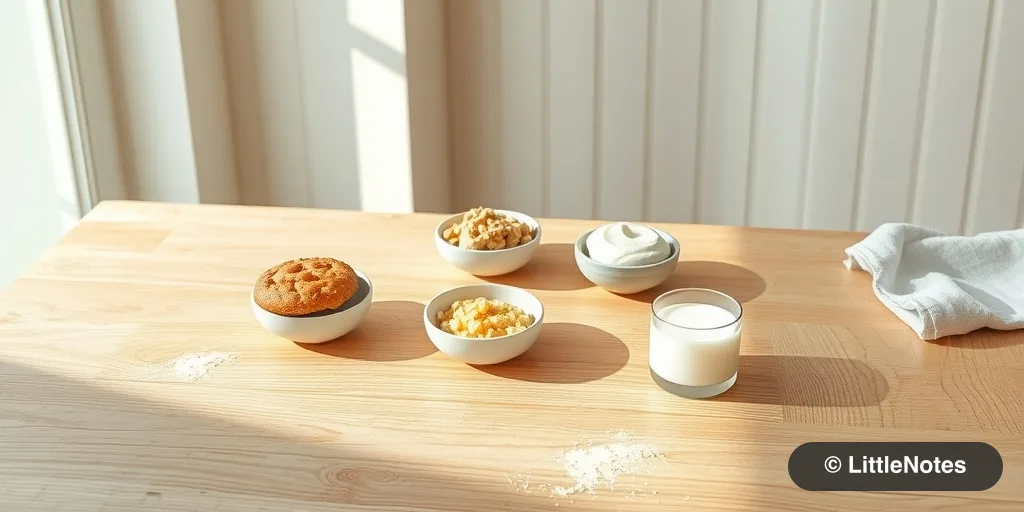
Introduce baked milk by making simple muffins using whole wheat flour, jaggery, milk, oil, and baking powder. This is an effective way to follow the first step of a milk ladder.
Managing a suspected Cow’s Milk Protein Allergy (CMPA) can be an incredibly stressful and confusing journey for new parents. When faced with symptoms like full-body hives, bloody stools, or persistent reflux, it is natural to want a quick diagnosis. However, clinical experience suggests that navigating this requires patience and a systematic approach. Unders…
It is important to distinguish between a true allergy and an intolerance by consulting your pediatrician for an accurate diagnosis. In cases…
If you suspect lactose intolerance, consult a pediatrician to distinguish between allergies and intolerances before altering your breastfeeding routine or eliminating dairy.
To implement the milk ladder at home, incorporate small, measured amounts of cooked curd into savory recipes like suji dosa, mixing 1 teaspoon of curd with suji, aata, and grated vegetables to monitor for reactions.
When introducing cooked curd as part of the milk ladder, it helps to incorporate it into dishes where the amount can be easily measured and…
Traveling with a little one who has a Cow’s Milk Protein Allergy (CMPA) requires a bit of extra preparation, but it certainly doesn't mean you have to stay home. With a few strategic planning tips, you can enjoy dining out or traveling safely. Dining Out & Hotel Tips When you are at a hotel or restaurant, don't be afraid to ask for modifications. Many Indian…
If your child has not yet outgrown their Cow’s Milk Protein Allergy by age two, consult your pediatrician about continuing their current spe…
Raising a family on a dairy-free or vegan diet is more than possible—it’s an opportunity to explore a world of vibrant, delicious, and nutrient-dense foods! Whether you are managing an allergy or choosing a plant-based lifestyle, having a go-to list of ingredients and meals can make meal planning much smoother. Building a Balanced Plate Focus on versatile pr…
If your child is over 2 years old and still requires a milk alternative for CMPA, consult your pediatrician about continuing their current specialized formula rather than switching.
Greenish-tan stool in infants who are combo-fed is often normal and does not necessarily indicate Cow's Milk Protein Allergy (CMPA), especially if there is no mucus, blood, or distress.
If your baby experiences multiple vomiting episodes after being introduced to egg, discontinue use and consult your pediatrician to investigate a potential egg allergy.
Once a baby moves to solid foods, it can be more difficult to spot physical signs of a reaction, such as blood in the stool. If you are conc…
For parents managing Cow’s Milk Protein Allergy (CMPA), the journey can feel overwhelming, especially when it comes to understanding how other common allergens interact with your little one’s sensitive system. While CMPA is distinct from other food allergies, it is common for parents to wonder if their baby might be susceptible to other reactions as they beg…
If you are breastfeeding a baby with CMPA, it is important to maintain your own nutrient levels while avoiding dairy. Most standard calcium…
It is not uncommon for infants with CMPA to have sensitivities to other foods, as their immune systems can be more reactive. Eggs, soy, and…
If you are concerned about hidden blood in your baby's stool that isn't visible to the naked eye, ask your pediatrician about a stool routine test for occult blood.